Vanilla Cake With Butter Frosting
Highlighted under: Bakes & Bliss
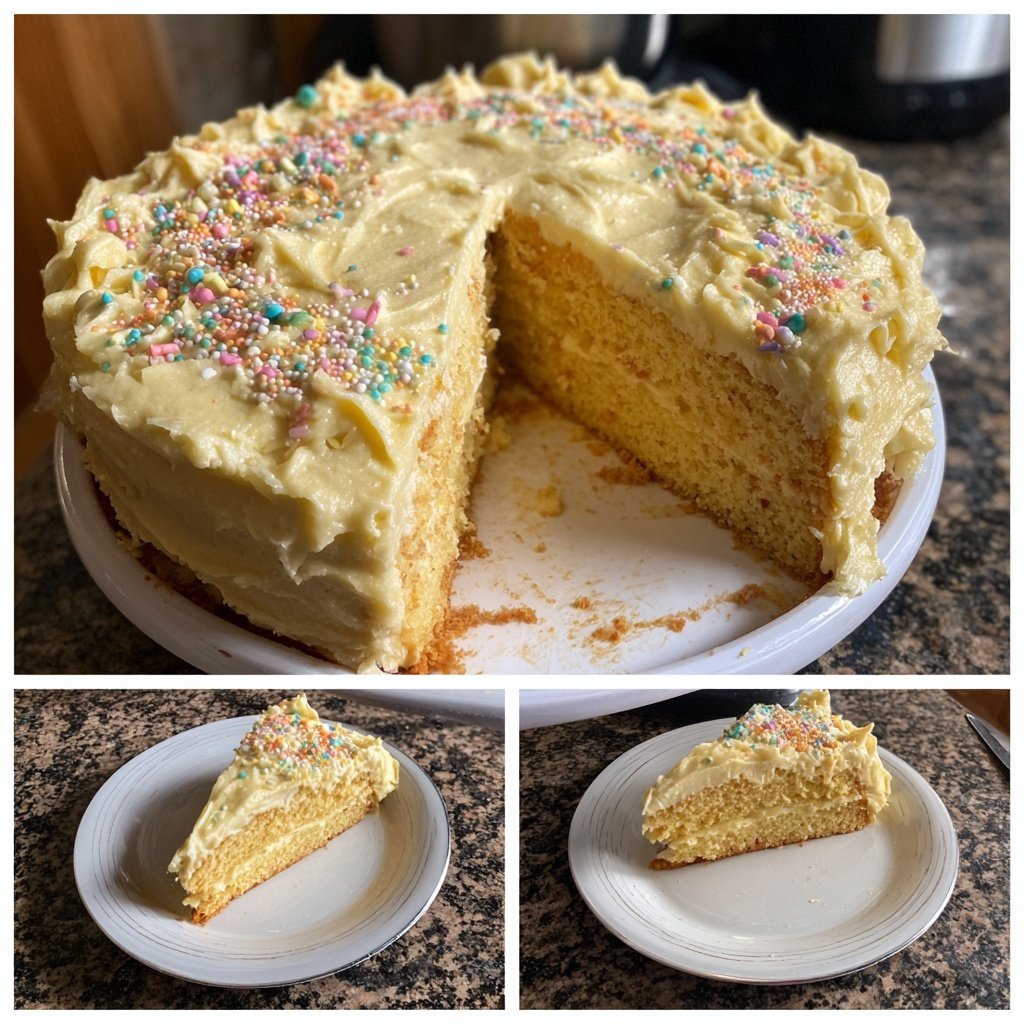
I absolutely adore this Vanilla Cake with Butter Frosting! Every bite delivers a sweet, buttery flavor that takes me back to my childhood. Baking this cake always brings about joyful memories, whether it’s for a birthday celebration or just a simple weekend treat. The combination of soft, fluffy vanilla cake layered with rich buttercream frosting makes it a classic favorite. The process is straightforward, and I enjoy experimenting with different sprinkles or toppings to suit any occasion. It's a dessert that truly makes my heart sing!
When I first attempted this Vanilla Cake with Butter Frosting, I was a bit nervous about achieving the perfect texture. However, I learned that creaming the butter and sugar really makes a difference in creating a light and airy cake. I've also discovered that using high-quality vanilla extract elevates the flavor immensely.
This cake has become my go-to for celebrations and casual gatherings alike. I love how versatile it is—whether I swap in almond extract or pair it with fresh fruit, it never fails to impress. Don’t forget to let the cake cool completely before frosting; patience is key for a flawless finish!
Why You Will Love This Recipe
- A classic dessert that pleases any crowd
- Rich, creamy butter frosting enhances the vanilla flavor
- Ideal for birthdays, weddings, or any festive gathering
Understanding Ingredients
The beauty of this Vanilla Cake lies not just in its flavor, but also in the quality of its ingredients. Using unsalted butter allows you to control the salt levels, enhancing the cake's sweetness. Ensure that your butter is at room temperature for easy creaming, which helps incorporate air into the batter, yielding a light and fluffy texture. Granulated sugar plays a crucial role here, as it helps to tenderize the cake and contributes to the maillard reaction, providing a golden-brown color and depth of flavor during baking.
The combination of eggs and whole milk is pivotal in achieving the perfect crumb. Eggs provide structure and moisture, while whole milk enriches the batter, offering a creamy mouthfeel. If you want to create a lighter version of this cake, you can substitute with egg whites for part of the whole eggs, although the result may be slightly less rich. Likewise, for a dairy-free version, almond or oat milk can be used, though these may affect the flavor profile slightly.
Frosting Tips and Variations
Achieving the perfect butter frosting is all about consistency. When mixing the softened butter, ensure it's creamy but not too warm; overmixing can lead it to become overly greasy. Gradually adding powdered sugar helps maintain the firmness of the frosting. For variations, consider infusing your frosting with flavors such as espresso powder or citrus zest to complement the vanilla in the cake. If you find your frosting is too thick, loosening it with heavy cream helps create a silky texture that spreads beautifully.
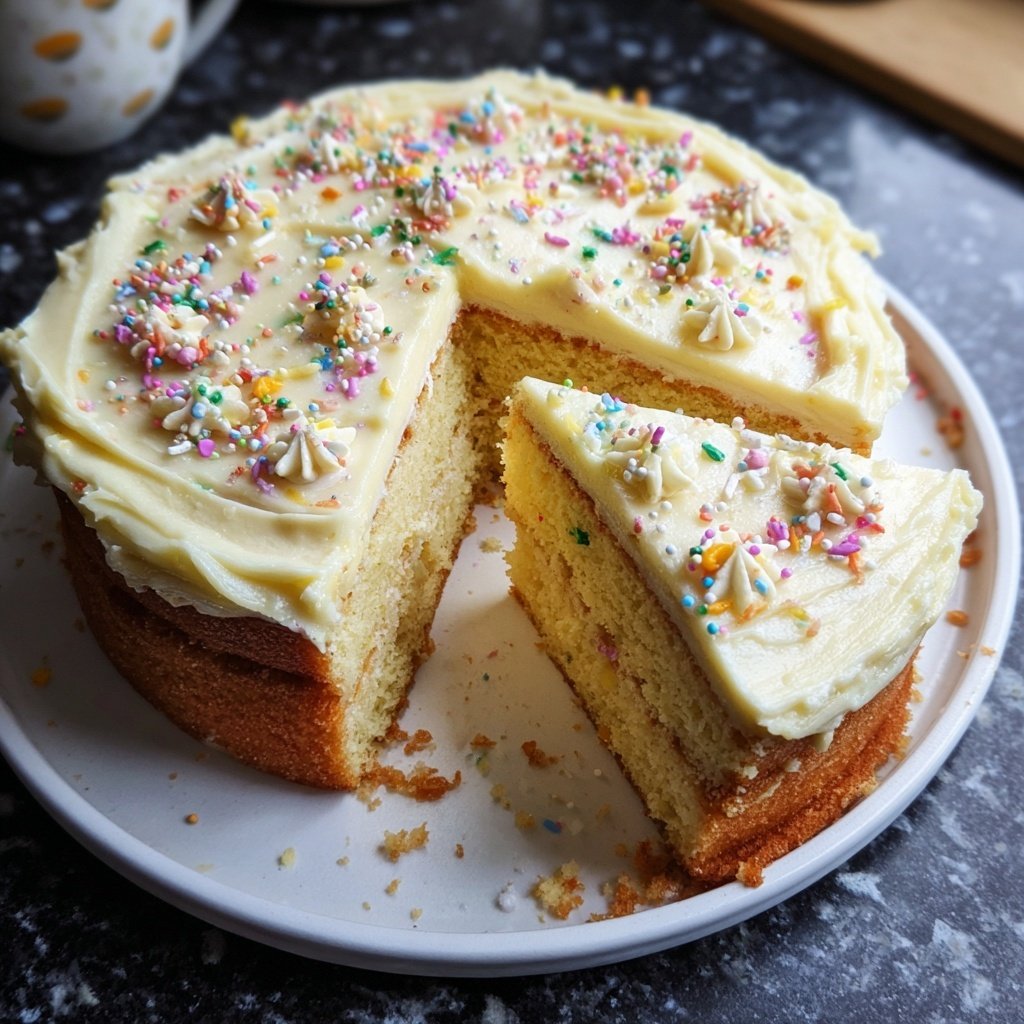
Decoration can elevate your cake's presentation dramatically. After frosting, I often sprinkle colored sprinkles, edible glitter, or toasted nuts for added texture and flair. If you're making this cake for special occasions, fresh berries or chocolate shavings make delightful toppings as well. For a more decadent twist, try layering raspberry or strawberry jam between the cake layers before adding frosting for an added burst of flavor.
Ingredients
Gather the following ingredients to get started on this delightful cake:
For the Vanilla Cake
- 2 cups all-purpose flour
- 1 ½ cups granulated sugar
- ½ cup unsalted butter, softened
- 1 cup whole milk
- 3 ½ teaspoons baking powder
- 1 teaspoon vanilla extract
- ½ teaspoon salt
- 3 large eggs
For the Butter Frosting
- 1 cup unsalted butter, softened
- 4 cups powdered sugar
- 2 teaspoons vanilla extract
- 2-4 tablespoons heavy cream
Now that you have all your ingredients, you're ready to make this delicious vanilla cake!
Instructions
Follow these steps to bake your delicious Vanilla Cake with Butter Frosting:
Prepare the Cake Batter
Preheat your oven to 350°F (175°C). In a mixing bowl, beat the softened butter and granulated sugar together until light and fluffy. Add the eggs one at a time, mixing well after each addition. Stir in the vanilla extract. In another bowl, combine the flour, baking powder, and salt. Gradually add the dry mixture to the wet mixture, alternating with the milk, until combined.
Bake the Cake
Divide the batter evenly between two greased 9-inch round cake pans. Bake in the preheated oven for about 30 minutes or until a toothpick comes out clean. Once baked, let the cakes cool in the pans for 10 minutes before transferring to a wire rack to cool completely.
Make the Butter Frosting
While the cakes cool, prepare the butter frosting. Beat the softened butter until creamy, then gradually add the powdered sugar, mixing well. Add vanilla extract, followed by the heavy cream, until you achieve the desired consistency.
Assemble the Cake
Once the cakes are completely cooled, place one layer on a serving plate. Spread a generous layer of butter frosting on top. Place the second cake layer on top and frost the top and sides of the entire cake. Decorate as desired.
Your Vanilla Cake with Butter Frosting is now ready to enjoy!
Pro Tips
- For an elevated flavor, consider adding a dash of almond extract to the frosting. Make sure all ingredients are at room temperature for the best results.
Storage and Make-Ahead Options
Once baked and cooled, this Vanilla Cake can be stored at room temperature for about 2-3 days, covered with plastic wrap to maintain its moisture. For longer storage, or if you want to make it in advance, wrapping the cake layers tightly in plastic and freezing them can extend freshness for up to 3 months. To thaw, simply place in the refrigerator overnight, allowing it to regain its softness before frosting.
If you're planning to frost the cake later, store the buttercream frosting in an airtight container in the refrigerator. When ready to use, simply rewhip it with an additional tablespoon of heavy cream to restore its texture and spreadability. This way, you can enjoy freshly frosted cake without the rush.
Common Troubleshooting Tips
If your cake comes out too dense, it may be due to overmixing once the flour is added. Aim for gentle stirs once the dry ingredients are incorporated, as this maintains the delicate texture needed for a light cake. Also, ensure your baking powder is fresh; old leavening agents can lead to a stubbornly flat cake that doesn't rise properly.
For frosting that’s too soft and runny, try chilling it briefly in the refrigerator before rewhipping. On the other hand, if the frosting seems too stiff, incorporate milk or cream a teaspoon at a time until you reach your desired consistency. These simple adjustments make all the difference in achieving the perfect frosting texture.
Questions About Recipes
→ Can I use cake flour instead of all-purpose flour?
Absolutely! Cake flour will give you a lighter and fluffier cake.
→ How do I store leftover cake?
Store the cake in an airtight container at room temperature for up to 3 days, or in the fridge for up to a week.
→ Can I freeze the cake?
Yes! You can freeze the unfrosted cake layers for up to 3 months. Just make sure to wrap them well.
→ What can I use instead of eggs?
You can use 1/4 cup unsweetened applesauce or a flax egg for each egg in the recipe.
Vanilla Cake With Butter Frosting
Created by: Abigail Foster
Recipe Type: Bakes & Bliss
Skill Level: Intermediate
Final Quantity: 8 servings
What You'll Need
For the Vanilla Cake
- 2 cups all-purpose flour
- 1 ½ cups granulated sugar
- ½ cup unsalted butter, softened
- 1 cup whole milk
- 3 ½ teaspoons baking powder
- 1 teaspoon vanilla extract
- ½ teaspoon salt
- 3 large eggs
For the Butter Frosting
- 1 cup unsalted butter, softened
- 4 cups powdered sugar
- 2 teaspoons vanilla extract
- 2-4 tablespoons heavy cream
How-To Steps
Preheat your oven to 350°F (175°C). In a mixing bowl, beat the softened butter and granulated sugar together until light and fluffy. Add the eggs one at a time, mixing well after each addition. Stir in the vanilla extract. In another bowl, combine the flour, baking powder, and salt. Gradually add the dry mixture to the wet mixture, alternating with the milk, until combined.
Divide the batter evenly between two greased 9-inch round cake pans. Bake in the preheated oven for about 30 minutes or until a toothpick comes out clean. Once baked, let the cakes cool in the pans for 10 minutes before transferring to a wire rack to cool completely.
While the cakes cool, prepare the butter frosting. Beat the softened butter until creamy, then gradually add the powdered sugar, mixing well. Add vanilla extract, followed by the heavy cream, until you achieve the desired consistency.
Once the cakes are completely cooled, place one layer on a serving plate. Spread a generous layer of butter frosting on top. Place the second cake layer on top and frost the top and sides of the entire cake. Decorate as desired.
Extra Tips
- For an elevated flavor, consider adding a dash of almond extract to the frosting. Make sure all ingredients are at room temperature for the best results.
Nutritional Breakdown (Per Serving)
- Calories: 380 kcal
- Total Fat: 26g
- Saturated Fat: 15g
- Cholesterol: 195mg
- Sodium: 85mg
- Total Carbohydrates: 32g
- Dietary Fiber: 3g
- Sugars: 24g
- Protein: 6g